

Last Updated: November 19, 2026
Quick Summary
Precision shooters need a gear retailer that publishes real specifications, confirms compatibility, and stocks the mounting and support hardware that determines whether a rifle shoots to its potential. Elcas Tactical's catalog includes competition chassis systems, bipods, one-piece mounts, electronic levels, chronographs, and related support items.
- GOHUNT covers draw odds and point tracking but offers no ballistic data or gear retail.
- Confirm your rifle action against the chassis compatibility list before buying.
- The MDT One-Piece Scope Mount uses 4.36 inches of rail contact and four clamping cross bolts.
- The Labradar LX chronograph is listed at plus or minus 0.1 percent accuracy from 65 to 5,000 fps.
- The MDT 50 MOA Picatinny base provides 50 MOA of cant for long-range dialing.
Table of Contents
- Why Precision Shooters Outgrow GOHUNT
- onX Hunt vs GOHUNT: Which App Fits Your Shooting
- Is There a Free GOHUNT Alternative That Works?
- What Precision Shooters Actually Need From a Gear Retailer
- Best Hunting Gear Retailers for Precision Shooters: What to Compare
- Gear That Closes the Gap: Chassis, Bipods, and Mounts
- Building Your Precision Setup at Elcas Tactical
- Frequently Asked Questions
Why Precision Shooters Outgrow GOHUNT
GOHUNT is known for draw odds, point tracking, and unit research for western hunting. Those tools earn their subscription for a hunter planning a pronghorn tag in a new state. But a precision shooter has a different problem set. You need a gohunt alternative for precision shooters that treats ballistic data, mounting rigidity, and load development as first-class concerns.
GOHUNT answers "where should I apply?" It does not answer "why did my point of impact shift two tenths at 800 yards?"
Competitive shooters and big game hunters often describe a similar split between research tools and precision gear. That split is not a failure of GOHUNT; hunt planning software and precision shooting equipment solve separate problems.
Below, we break down where each approach fits, what matters when you select a gear source, and how to build a setup that holds zero under pressure.
onX Hunt vs GOHUNT: Which App Fits Your Shooting
onX Hunt is a mapping and land-ownership tool: property boundaries, public land layers, offline maps, GPS tracking, and waypoints. GOHUNT is a research tool: draw odds, point forecasting, unit research, and e-scouting for western hunting applications. Neither is a ballistic solver, and neither sells you a chassis.
onX Hunt product documentation describes the offline map and property boundary layers that hunters rely on for in-field navigation. GOHUNT's application research overview frames its draw odds and point tracking as the core of the platform. Read both descriptions side by side and the gap becomes obvious: mapping detail and research depth, not shooting accuracy.
For precision shooters, the takeaway is simple. Use onX Hunt if land boundaries and offline navigation matter most. Use GOHUNT if draw odds and point forecasting drive your season planning. Neither replaces a chronograph, a rigid mount, or a bipod that holds under recoil.
Here is how the two compare on general features:
| Feature Area | onX Hunt | GOHUNT |
|---|---|---|
| Primary strength | Mapping and boundaries | Draw odds and research |
| Offline maps | Yes, core feature | Limited navigation focus |
| Unit research | Basic | Deep, application-focused |
| Point tracking | No | Yes, core feature |
| Ballistic data | No | No |
| Gear retail | No | Limited |
Most serious precision shooters end up running one navigation app and buying gear from a specialist. That is the correct division of labor.
Is There a Free GOHUNT Alternative That Works?
A free GOHUNT alternative can cover basic mapping and unit research, but no free tier replaces a dedicated precision gear source. Free tools can carry the software side of precision shooting further than most shooters expect.
Hardware selection and compatibility questions, such as whether a chassis accepts your action footprint or whether a mount's ring height clears your objective bell, are best answered by published product specifications.
Confirm action compatibility before buying a chassis or mount, and check the product listing for the published compatibility list.
If budget is the constraint, start free on the software side and spend deliberately on the hardware that actually affects precision.
What Precision Shooters Actually Need From a Gear Retailer
Precision shooters need a gear retailer that publishes real specifications, confirms compatibility, and stocks the mounting and support hardware that determines whether a rifle shoots to its potential.
Elcas Tactical's catalog includes competition chassis systems, bipods, one-piece mounts, electronic levels, chronographs, and related support items.
What should you actually compare when choosing a source? Four things:
- Published specifications. Action compatibility, ring diameters, height options, and rail cant should be stated.
- Mounting and support depth. A retailer that stocks chassis, bipods, and levels understands how the parts interact.
- Precision-relevant accessories. Forend weights, rear bags, and electronic levels are not upsells. They are performance parts.
- **
If you are comparing gear retailers, our own tripod recommendations are a fair test of whether a source understands precision shooting. Read our picks for the best tripod for long range precision shooting and judge the reasoning for yourself.
Best Hunting Gear Retailers for Precision Shooters: What to Compare
Retailers are often compared on catalog size, brand names, and shipping speed. Those matter, but they do not tell a precision shooter whether a retailer understands the parts that affect point of impact.
Here is the comparison framework we would use if we were shopping, applied to the criteria that actually move the needle for long-range and precision shooting:
| Criteria | Why It Matters | What Good Looks Like |
|---|---|---|
| Spec transparency | Prevents incompatible purchases | Action lists, ring diameters, height options, rail cant published |
| Mounting depth | Affects zero retention | One-piece mounts, bases, rings from known makers with torque specs |
| Support hardware | Affects consistency | Bipods, rear bags, forend weights, electronic levels in stock |
| Ballistic workflow | Affects load development | Chronographs with real accuracy specs, ballistic solver compatibility |
| Long-range support | Affects dialing and holding | Canted bases, elevation travel data, reticle and turret guidance |
| Pricing clarity | Affects total cost | One-time prices, no hidden subscription |
A retailer's catalog tells you what they think precision means. A store heavy on optics but thin on mounts and support gear is optimizing for the wrong purchase. The parts that hold your zero matter most under pressure.
A second thing to weigh is whether the retailer publishes the compatibility information you need before you buy. A mount that does not fit your action is a return, a delay, and a lost match weekend. A chassis that does not accept your action footprint is worse. The best precision retailers list action compatibility, ring diameters, height options, and rail cant directly on the product page.
A third criterion is ballistic workflow support. A precision shooter needs a chronograph that reports average, extreme spread, and standard deviation, and a ballistic solver that accepts real environmental inputs. A retailer that carries chronographs with published accuracy specs and understands how those numbers feed a solver is a different kind of source than one that lists chronographs as an accessory. The same applies to canted scope bases: a retailer that explains how much elevation travel a 20 MOA or 50 MOA base adds understands long-range dialing, not just SKU management.
A fourth criterion is whether the retailer's guidance is measurable. Opinions about glass clarity are easy. Statements about zero retention, mounting rigidity, and balance are testable. When a retailer publishes torque specs, cross-bolt counts, and rail contact length, you can compare products on the dimensions that affect point of impact.
If you are comparing gear retailers, our own tripod recommendations are a fair test of whether a source understands precision shooting. Read our picks for the best tripod for long range precision shooting and judge the reasoning for yourself.
Gear That Closes the Gap: Chassis, Bipods, and Mounts
Three categories do most of the work in a precision setup: the chassis, the bipod, and the mount. Get these right and the rifle behaves predictably. Get them wrong and no amount of load tuning rescues you.
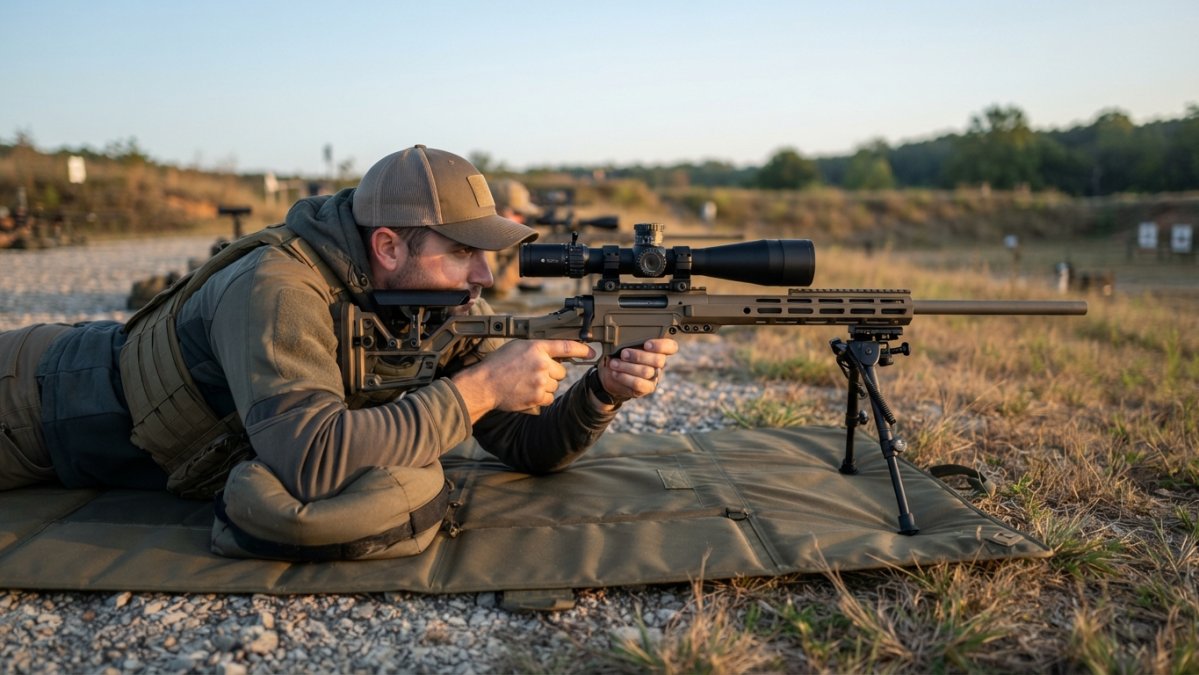
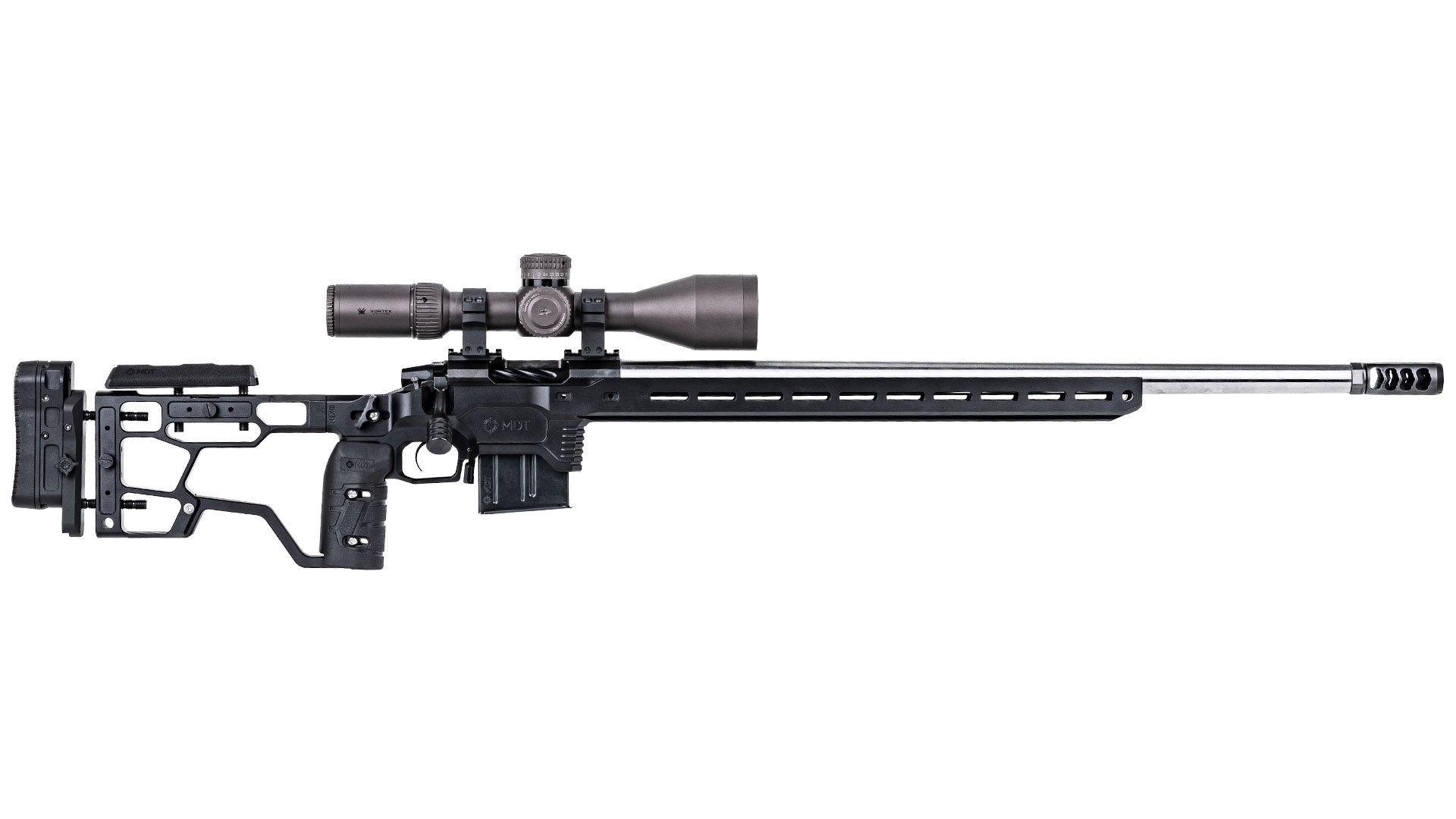
Start with the chassis. The MDT ACC Elite Chassis System is a competition-grade platform with an integrated forend and adjustable buttstock, built for Remington 700 short and long action, Tikka T3/T3x short action, CZ 457, and Savage short action. It supports weight tuning and accessory mounting.
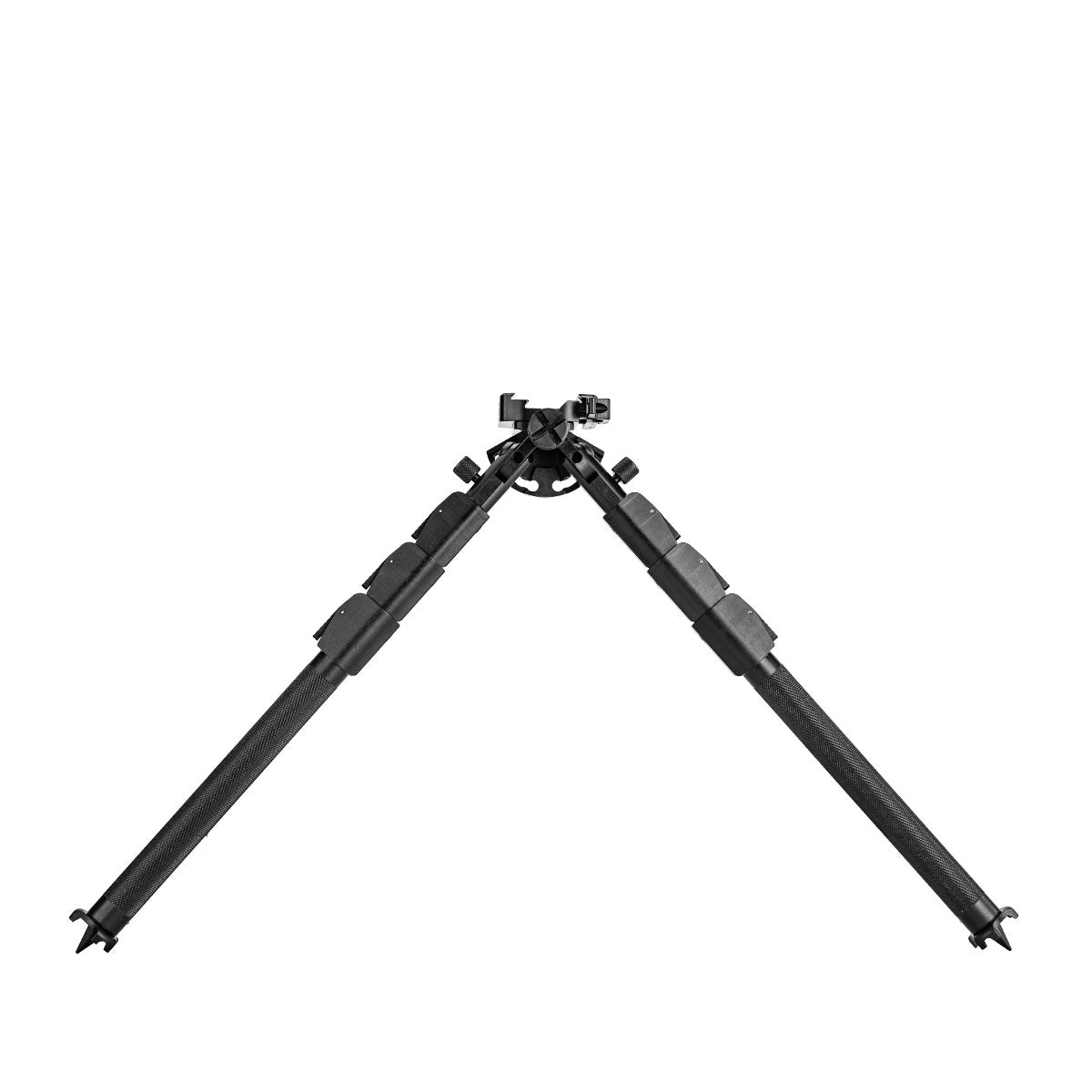
Then the bipod. The MDT CKYE-POD GEN3 Triple Pull Bipod is a triple pull bipod for precision shooting and hunting. It is compatible with the ACC Elite, ACC Premier GEN2, CRBN, HNT, and LSS GEN3 systems.
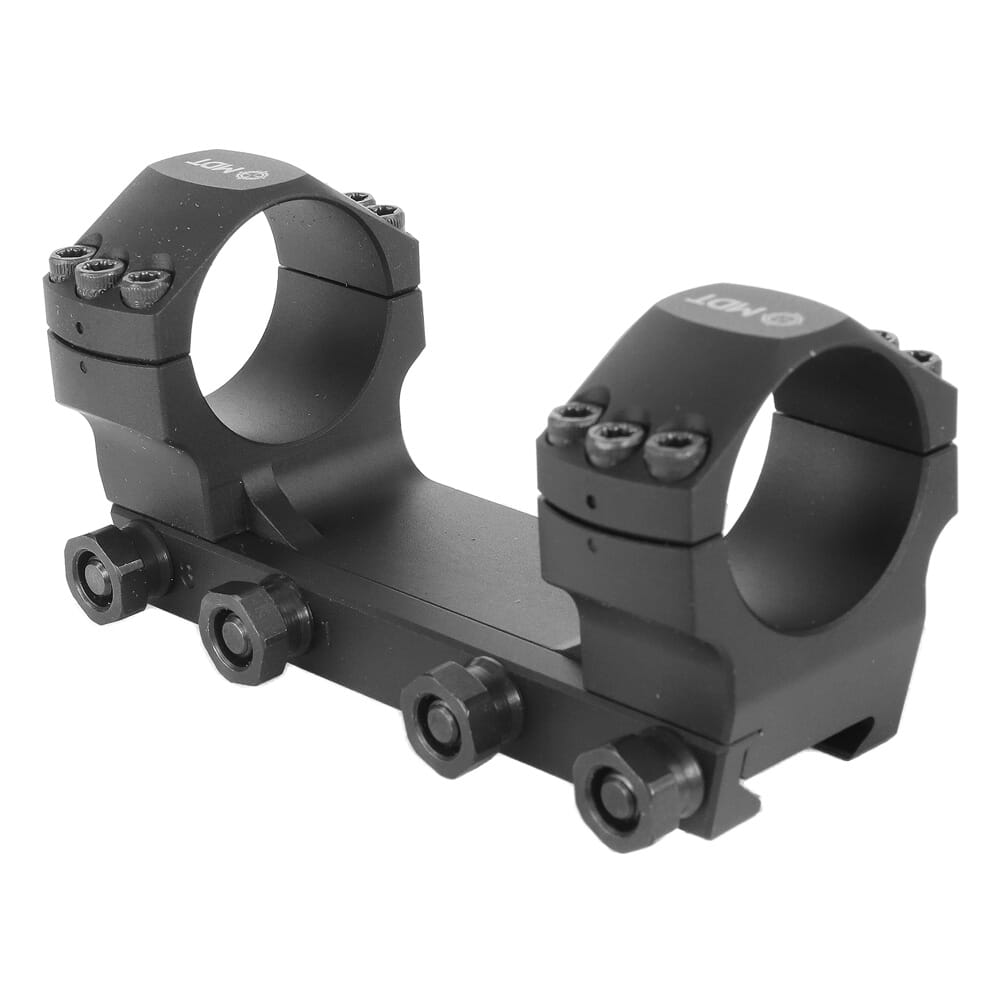
Mounting is where zero goes to die. The MDT One-Piece Scope Mount uses 4.36 inches of rail contact, four clamping cross bolts, and six cap screws per ring. If you are weighing quick-detach options, read whether quick-detach mounts are reliable for tactical setups before you commit.
Two more parts earn their place. The MDT Send It Gen2 electronic level is a rifle-mounted level, and the MDT 50 MOA Picatinny base provides 50 MOA of cant. A GRS rear bag and M-LOK forend weights are also available to support the setup.
The Labradar LX Doppler radar chronograph is listed with an accuracy of plus or minus 0.1 percent across a 65 to 5,000 fps velocity range, and it displays average, extreme spread, and standard deviation velocity data.
Building Your Precision Setup at Elcas Tactical
Building a precision setup is a sequencing problem, not a shopping problem. Buy the foundation first, confirm compatibility, then add the support parts that tighten consistency.
Here is the order we would follow:
- Confirm your rifle action against the chassis compatibility list
- Select a chassis that supports the weight tuning your discipline needs
- Choose a bipod with the height range your shooting positions demand
- Pick a one-piece mount or rings sized to your optic tube diameter
- Add a scope base with enough cant for your maximum distance
- Fit an electronic level to eliminate cant error
- Add forend weights and a rear bag to balance the rifle
- Verify velocity with a chronograph before finalizing your load
This sequence helps avoid buying accessories before confirming the foundation fits.
Precision shooting rewards preparation and punishes shortcuts, especially in the mounting and support hardware that holds your zero under pressure. Elcas Tactical offers competition chassis systems, one-piece mounts, and bipods for demanding field conditions. Get started with Elcas Tactical and build a precision setup that holds zero when it counts.
Frequently Asked Questions
What is the best GOHUNT alternative for precision shooters?
For precision shooters, the best alternative is not another hunting app but a gear retailer that stocks competition-grade components. GOHUNT is built around draw odds and unit research, while precision shooting depends on chassis rigidity, bipod stability, and scope mounting repeatability. Elcas Tactical carries MDT chassis systems, CKYE-POD bipods, and one-piece scope mounts that address those needs directly.
Is onX Hunt a good alternative to GOHUNT?
onX Hunt is a strong alternative if your priority is mapping and land boundaries. It provides offline maps, property lines, and GPS navigation for e-scouting. GOHUNT adds draw odds and point forecasting on top of mapping. Neither app sells precision shooting hardware, so onX Hunt works best as a planning tool alongside a gear retailer, not as a replacement for one.
Where can precision shooters buy tripods and shooting accessories?
Look for retailers that stock competition-proven brands and publish exact specifications. Elcas Tactical carries MDT CKYE-POD GEN3 bipods, MDT ACC Elite chassis systems, electronic levels, and scope mounts. Check that the retailer lists compatible actions and chassis systems before ordering, so you avoid fitment issues on match day.
Does GOHUNT sell precision shooting gear?
GOHUNT is primarily a hunting application and research tool, not a precision shooting retailer. Its focus is draw odds, point tracking, and unit research for western hunting. Precision shooters need chassis systems, bipods, scope mounts, and chronographs, which fall outside GOHUNT's core offering. That gap is why many shooters pair a research app with a dedicated gear retailer.
Are there free alternatives to GOHUNT?
Free alternatives exist for mapping and scouting, but they usually lack draw odds and point forecasting. State wildlife agency websites publish draw statistics at no cost, and For gear, there is no free substitute for quality components. Budget accordingly for the chassis, bipod, and mounting hardware that actually affect precision.
